

Uncategorized

ANCOM submitted to public consultation the draft decision amending Decision 134/2022 on the inventory of electronic communications networks
The National Authority for Administration and Regulation in Communications (ANCOM) has submitted for public consultation a draft decision which – according to the Authority – aims to optimize the process of transmitting information on the development and geographical location of public electronic communications networks and their associated physical infrastructure elements. The new framework will replace Decision no. 134/2022 and will update the conditions for collecting and transmitting data on electronic communications networks and their associated physical infrastructure.
ANISP will send an opinion showing its support for ANCOM’s effort to simplify the attribute structure (such as eliminating the feature regarding the state of the element or making pole-mounting accessories optional), but at the same time it will sound an alarm regarding a series of new obligations that may generate a disproportionate administrative and financial burden for providers of electronic communications networks and services.
Thus, among the ANISP requests for amendment are: proposing exceptions for small providers; declaring energy autonomy with longer intervals; declaring leased underground segments only by the coordinates of the ends, simplifying coding, operationalizing a tool for prior data verification and applying the new decision after a transition / calibration interval.
Details on the Authority’s site.

ANISP at COMINT 2026
On June 30, 2026, ANISP participated in the COMINT Romania Forum 2026 conference, organized by the Digital Transformation Council, Comunicații Mobile magazine and TelecomTV.
The central theme of the conference was “Drones, Anti-Drones and Communications Intelligence in the New Security Economy”, an extremely hot topic on the global public and institutional agenda.
The forum brought together leaders from the defense, telecommunications, artificial intelligence and public administration sectors (including entities such as ROMARM, ANCOM, ROMATSA, ICI Bucharest and the Politehnica University of Bucharest). The main ideas debated focused on the convergence of autonomous technologies, radio spectrum management and cybersecurity in the context of new geopolitical realities. There was intense discussion about the development and integration of drone systems (UAV) and countermeasures (anti-drone), as well as the resilience of critical infrastructures. Another major theme was the use of artificial intelligence in the analysis and management of communications information (COMINT – Communications Intelligence). Beyond the technical and national security aspects, an essential conclusion of the conference was related to the country’s technological sovereignty: Romania is at a historical turning point and must decide whether it will become an active developer of these strategic technologies or remain just a simple consumer of external solutions.
Details in the conference’s website.

DNA – Digital Networks Act
Interested entities can submit feedback regarding the European regulation proposal ‘DNA’ (Digital Networks Act) until Monday, June 15, 2026, inclusive, using the dedicated form:
The stated purpose of the new regulation is to improve access to secure, fast, and reliable connectivity—enabling the transition toward an infrastructure based on cloud and artificial intelligence. The new act replaces the old European Electronic Communications Code (EECC) and transforms previous directives into a single Regulation, directly applicable across all 27 Member States, eliminating bureaucratic barriers and unifying divergent national regulations.
The main pillars of the Digital Networks Act (DNA):
– Single Market Passport: Telecom operators will be able to operate on a pan-European level based on a single notification submitted to a single central authority, drastically reducing the more than 1,000 local conditions currently in place.
– Mandatory Transition to Fiber Optic: A strict timeline is established for the definitive switch-off of legacy copper networks and the upgrade to Fibre-to-the-Home (FTTH) technology. The process will become mandatory across the EU after December 31, 2035.
– Modernization of Radio Spectrum and Satellites: To boost 5G and next-generation networks, indefinite spectrum licenses and a centralized EU-level authorization system for satellite operators are introduced. Additionally, the principle of radio spectrum sharing is enforced as the default norm.
– Resilience and Quantum Security: In the face of current geopolitical threats, the DNA establishes a Union Preparedness Plan for critical infrastructures (including submarine cables) and mandates a long-term transition to post-quantum cryptography.
– New Governance Authority: The current BEREC Office will expand its competencies and transform into the Office for Digital Networks (ODN), which will provide centralized administrative and technical support for the single market.

World Telecommunication and Information Society Day 2026
With the subtitle “Who is accelerating Romania’s Digital Transformation in the next 1000 days?”, DIGITAL TRANSFORMATION COUNCIL together with Revista COMUNICAŢII MOBILE and TELECOMTV organize on May 25, 2026, 11:00 – 15:00, at the Chamber of Commerce and Industry of Romania (CCIR Business Center) – Bd. O. Goga, no. 2, Aula Aurel Ghibuțiu – Bucharest, the annual conference dedicated to WORLD TELECOMMUNICATIONS and INFORMATION SOCIETY DAY (May 17) powered by ITU – The International Telecommunication Union.
WHO IS ACCELERATING ROMANIA’S DIGITAL TRANSFORMATION IN THE NEXT 1000 DAYS?
The Government, the Romanian Digitalization Authority (ADR), ANCOM and industry leaders, together with industry associations and academia – between execution and coordination, in the transition from connectivity to intelligence.
Romania has achieved what many countries are still pursuing: extensive connectivity, high-performance infrastructure, broad digital access. But the next stage is more complex: it is no longer about access to networks, but about access to intelligence.
ANISP will participate with a short presentation focused on the importance of optimal interconnection of the networks that define the Internet in Romania. Details on event’s page!

GPeC SUMMIT & Expo 2026
E-Commerce, Digital Marketing, Expo, Networking and Party at its best are promised by the organizers of the GPeC Summit 2026. The event, which will also be attended by ANISP, will take place on May 26, 2026 at the National Theater in Bucharest.
The event includes the GPeC Conference – about everything current in E-Commerce and Online Marketing, alongside top international speakers and 800+ C-Level participants, as well as the related exhibition – GPeC Expo, organized in parallel with the Conference. GPeC Expo is the place where e-commerce service providers can present their solutions to online stores and obtain leads.
More details on the event website!
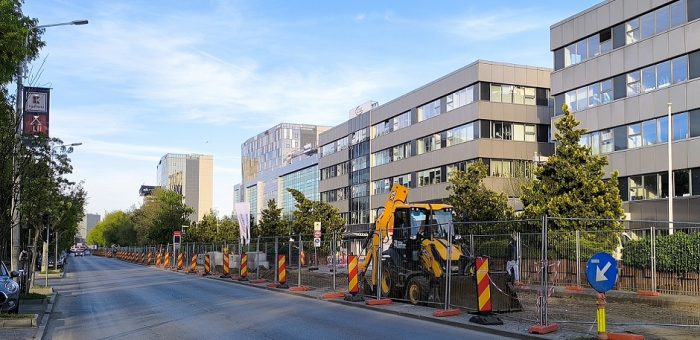
Municipal works in the key area of the Capital
“From a narrow street choked with cars, with one lane per direction and broken, degraded sidewalks, Dimitrie Pompeiu Blvd. will become a modern road, with two lanes per direction, green space, bike paths, a double tram line and much more generous sidewalks. The tram line will be extended to Barbu Văcărescu bldv., and the tracks will be connected to those of line #5. Over this extension, we will build a pedestrian walkway,” the Capital’s City Hall announced on its Facebook page.
The modernization of this boulevard, increasing the capacity of the highways and improving public transport are goals that must be supported by the entire community, residents, local authorities and the business environment.
ANISP, however, drew attention to the need for very good coordination between the entities involved in the project (Bucharest City Hall, the electronic communications infrastructure company NetCity, various contractors) – as there are many important centers in the area (network nodes, data centers, interconnection equipment, electronic communications networks and cables), and any inadvertent intervention on this infrastructure may have significant consequences for electronic communications provided by operators in Bucharest and even at the national level.
EU Commission approves ANCOM’s plan to reintroduce regulation in fixed wholesale local access in Romania
The European Commission has decided to lift its serious doubts concerning Romania’s plan to reintroduce regulation on the wholesale local access market provided at a fixed location, in light of the information gathered in the in-depth investigation.
In January 2025, the Romania’s telecommunications regulator ANCOM proposed to reintroduce regulation on this market to prevent price increases and protect consumer choice, identifying DIGI Romania S.A. as having significant market power. The Commission initially questioned ANCOM’s draft measures, arguing that barriers to entry were not high enough to justify wholesale regulation and warned of potential investment risks.
However, after a Phase 2 investigation, including input from the Body of European Regulators for Electronic Communications (BEREC) and further cooperation with ANCOM, the Commission reassessed its position. Key findings include:
Rural market challenges: Low population density, limited purchasing power, and DIGI’s first-mover advantage limit competitors’ incentives to build parallel networks.
Limited efficiency of physical infrastructure access: While ducts and poles exist, they do not enable rapid network rollout in rural areas and economic incentives for investment remain weak.
No evidence of investment harm: The proposed regulation is unlikely to deter DIGI’s future investments and overall sector investment remains strong.
The Commission considers ANCOM’s proposed remedies – targeted only at non-competitive areas – to be proportionate and justified. ANCOM may proceed with its regulatory measures. Original article: here.

Peering Days 2026 – Bologna
Between March 23-26, an ANISP / RoNIX delegation participated in the Peering Days 2026 event organized in Bologna by three major Internet eXchanges from Central Europe (BIX – Budapest Internet eXchange; NIX – Neutral Internet eXchange Czech Republic; VIX – Vienna Internet eXchange).
The event – like other peering-forum-type events – is an excellent opportunity to get the industry’s pulse (especially regarding trends in IP interconnections in Internet eXchanges) as well as to identify new Internet traffic and content delivery partners for the networks connected in RoNIX – the Internet eXchange network operated by ANISP.
The presentations given during the event are accessible at https://peeringdays.eu/programme/

Local workshop – ”Endurance” project
Yesterday March 17th, 2026 ANISP participated in the local workshop (Romania) related to the European project “Endurance – Strategies and Services for Enhanced Disruption Resilience and Cooperation in Europe”, funded by the Horizon Europe Program, focused on identifying suitable solutions for strengthening the resilience of essential service ecosystems and critical supporting infrastructures – the strategic approach aimed at increasing the level of awareness and development of resilience skills. The project has a duration of 3 years and includes 23 partners from Europe (research and development centers, authorities and critical infrastructure operators from Romania, Slovenia, Italy and Greece).
The event had a hybrid format (online & physical – at the DNSC headquarters at 22 Italiană Street, Bucharest) and enjoyed a wide audience. The event aimed to analyze the national resilience framework, increase the level of interoperability, develop training programs and stimulate accelerated innovation in the field of critical infrastructures.
Within the workshop there were also presented solutions based on the “Digital Twin” concept, as tools for assessing and monitoring critical infrastructures, along with sectorial perspectives supported by representatives of DNSC, DGPI and the Ministry of Health. The workshop also proposed applied discussions, based on concrete examples from the national experience of operators in critical sectors (e.g. telecommunications, energy, water supply), with the objectives of identifying immediate needs for improving operational resilience processes and exploring solutions for strengthening the resilience of critical infrastructures in a constantly evolving threat landscape.
More details on the project website: https://endurance-horizon.eu/
RITE 2025
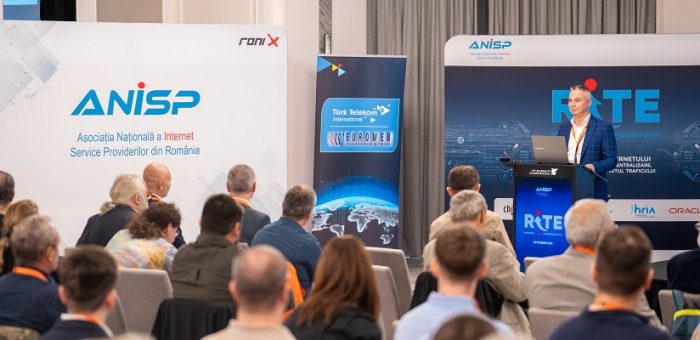
Tuesday, October 28, the 2025 edition of the Romanian Internet Technologies Event took place. After the usual introductory words from the organizers, very interesting sessions followed with the participation of industry specialists.
A special note was given by the participation of Mr. George Sadowski, one of the pioneers of the Internet, who pointed out historical landmarks as well as the development directions – the disruptive technologies of the future.
Presentations and panels aligned with the purpose of RITE followed – facilitating interaction between Internet service providers, content creators and users. The event maintains open dialogue between producers and consumers on fundamental topics of the day, such as Internet technologies and architecture, the evolution of accessible content from simple, unstructured data to accessible multimedia services in the cloud, given that the applications of recent years (AI, Cloud Computing, IoT and Quantum Computing) influence not only the services but also the infrastructure and architecture of the Internet.
More details on the event page.